Everyday prayer
Praying the Rosary when life keeps interrupting
The short answer
You can stop and resume. Praying the Rosary with distractions is still praying the Rosary, and the book is written for sincerity rather than perfect performance. Mark the bead or the decade where you paused, and pick it up again when you can.
Can you pause a Rosary and come back to it?
Yes. The Rosary is a sequence of prayers, not a single unbroken performance, and nothing in its structure requires you to finish before you attend to a child, a doorbell or an appointment. The practical question is only how to find your place again, and the beads themselves answer that.
If you would rather not resume later, praying a single decade is a complete unit of the prayer. The bead map shows exactly where one decade ends and the next begins.
What the book says about ordinary life
The guide was written with interruptions in view. Its description says plainly that it makes room for questions, distractions and ordinary responsibilities, and that you do not need flawless memory or uninterrupted concentration to begin.
Its guidance covers interruptions caused by childcare, appointments or other duties, and it addresses shared leadership in group prayer, which is where coordination problems usually appear: who announces the mystery, who starts each prayer, and whether the group includes the Fatima Prayer.
The meditations follow the same instinct. The Visitation is linked with love of neighbor expressed in encouragement, a meal or a visit. The Nativity invites reflection on gratitude and freedom from demands for possessions, status, control or comfort. The Proclamation of the Kingdom approaches repentance as an invitation to concrete change, not self-hatred.
Practical ways to keep your place
These are habits rather than rules. They are offered here as practical suggestions, and the book’s own guidance is the place to read its approach in full.
Leave the beads where you stopped
Set the rosary down with the next bead to be prayed in your fingers. The object becomes the bookmark, which is what it is for.
Say which decade you are in
Naming the mystery out loud before you step away gives you something sturdier than a bead count to return to.
Pray one decade at a time
A single decade is a complete unit of the prayer. Praying one in a spare five minutes is not a lesser Rosary; it is a decade prayed.
Keep one phrase from the mystery
A short phrase carried through the day does more for continuity than trying to hold the whole scene in mind at once.
Return without an apology
Resuming is the practice. Treating the interruption as a failure is what turns a small pause into a reason to stop entirely.
When attention drifts mid-decade
Wandering attention is not the same as a failed prayer. The USCCB describes the repetition of the Rosary as a way of entering restful and contemplative prayer, which assumes that the mind needs help settling rather than arriving already settled.
When you notice you have drifted, return to the mystery rather than to the beginning. If you cannot remember which Hail Mary you were on, continue from where your fingers are. The count serves the meditation; it does not judge it.
Some days the Rosary will feel like a rhythm and some days like work. The book’s stated emphasis on sincerity over performance is meant for the second kind of day.
Praying with a group
In group prayer, one person usually leads and the rest respond. The practical points worth settling before you begin are small: who announces each mystery, whether a short reading follows the announcement, and whether the Fatima Prayer is included after each decade. The prayer texts are the same either way.
If someone in the group is new, letting them lead a single decade is often more useful than handing them the whole prayer at once.
When prayer feels heavy
The book allows room for grief, silence, anger and numbness in its reflection on the Crucifixion, and it does not equate faithfulness with self-punishment or isolation. Seeking medical, emotional, spiritual or practical help is presented as compatible with faith rather than as a failure of it.
Written for a real week
Teresa Lavin’s guide keeps the prayer inside ordinary life, with guidance on interruptions, group prayer and the days when attention will not cooperate.
Sources
The description of repetition as a path into contemplative prayer comes from the USCCB’s guide to praying the Rosary. The book’s approach, its treatment of interruptions and its reflections on the mysteries come from its Amazon listing.
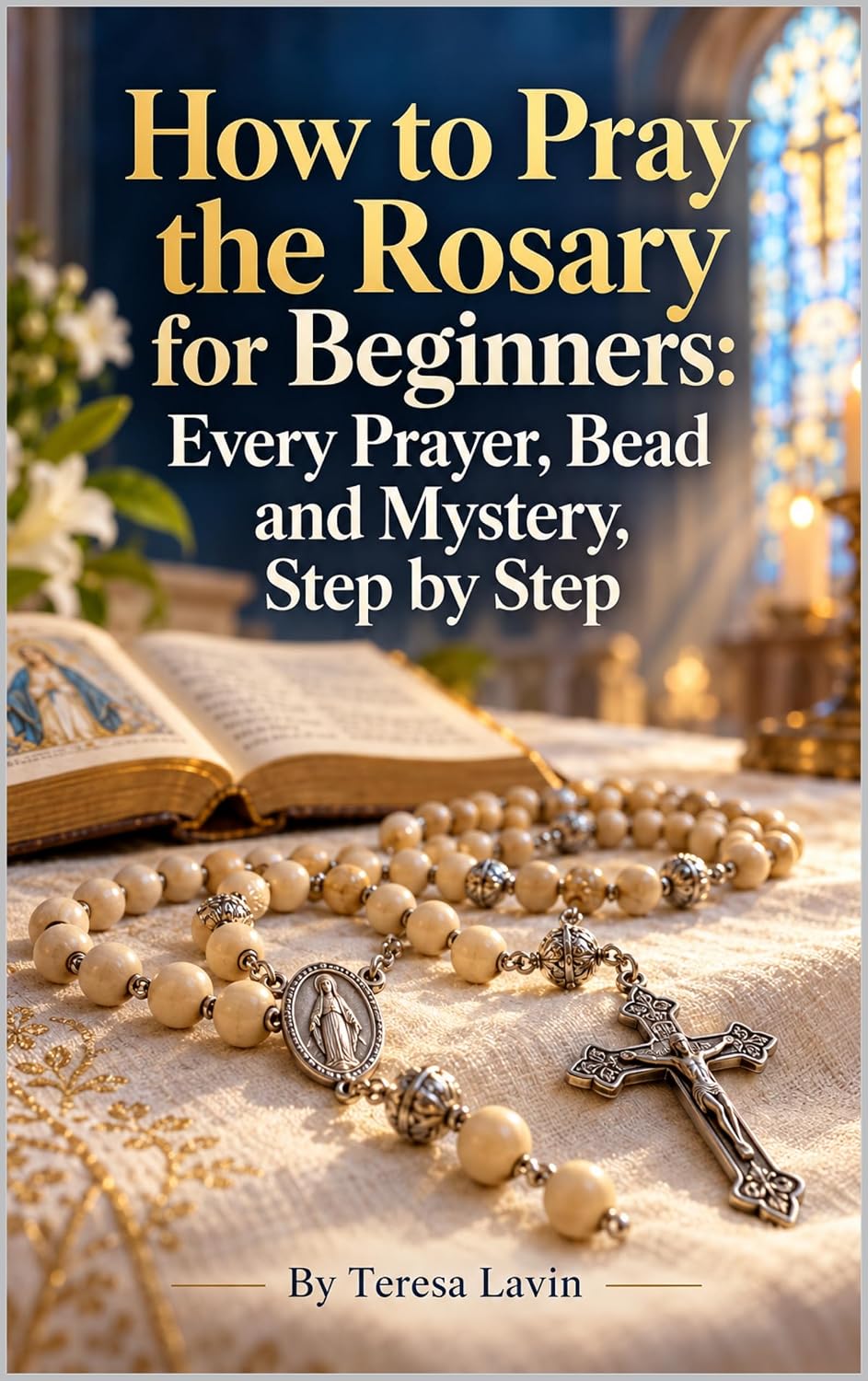
Where to find it
A prayer that fits the day you actually have.
The guide makes room for childcare, appointments and wandering attention, and explains the structure so the prayer survives the interruption.
How to Pray the Rosary for Beginners by Teresa Lavin · ASIN B0HQ2B4XTP