For newcomers
A Rosary guide for OCIA participants and sponsors
The short answer
Yes, an OCIA newcomer can use the guide. Its listing names OCIA participants among its intended readers, and it explains the prayer from the beginning: the sequence, the prayer texts and the mysteries. It is a devotional guide, not official OCIA program material, and it carries no claim of program approval.
What OCIA is, briefly
OCIA is the process through which adults are prepared for initiation into the Catholic Church. It is ordinarily a journey of formation rather than a single course, and participants meet the Church’s prayer as well as its teaching along the way. The Rosary is one of the devotions a participant is likely to encounter, whether at a parish gathering, in a sponsor’s home, or in a family they are getting to know.
Encountering it for the first time in that setting can be awkward. Everyone else seems to know when to stand, when to respond and which bead comes next, and nobody wants to interrupt to ask.
What a newcomer actually needs
The order of the prayer
A newcomer usually needs the shape of the Rosary before the theology of it: what comes first, what comes next, and where the decades begin and end.
The words themselves
The Creed, the Our Father, the Hail Mary and the Glory Be are long enough that a first attempt at praying them from memory is discouraging. Having the texts in front of you removes that obstacle.
Somewhere to put the mind
The mysteries give the repetition a subject. Without them, ten Hail Marys can feel like a count rather than a prayer.
Permission to ask
Questions about Mary, indulgences, the language of the prayers and the differences between translations are common among adults preparing for the sacraments.
Each of those is answered by the pages on this site, which is why they exist separately from the book: the sequence, the prayer texts, the bead map and the mysteries.
What the guide offers a participant
The book is built so that a reader can enter at the point that feels least intimidating. According to its description, it offers several ways in: begin with the basic sequence, turn to the prayer texts, or explore the mysteries.
It also treats the questions adults actually bring to a first encounter with Catholic devotion. The description names Marian intercession, the distinction between worship and veneration, indulgences and the Rosary’s development over time, and it explains unfamiliar language in the prayers, including phrases concerning sin, death and hell and differences between translations.
That combination is unusual in a beginner’s guide. Most either explain the mechanics or the theology. This one appears to be arranged so that a reader who is still deciding what they believe can pray alongside a reader who simply wants to learn the words.
For sponsors, catechists and parish volunteers
If you are accompanying someone through OCIA, the guide’s practical material is the useful part. It covers shared leadership in group prayer, which is the situation a sponsor usually finds themselves in: praying with someone who does not yet know the responses.
It also covers interruptions caused by childcare, appointments or other duties, which means a sponsor can hand it to a parent without implying that prayer requires an empty house and an hour of silence.
The interruptions page collects the practical habits that make group prayer easier for a newcomer, and the prayers page has the texts a sponsor can share.
What the guide is not
It is a devotional guide, not a catechism, and not an official resource of any OCIA program. Nothing on this site claims that a parish, diocese or program has approved or recommended it, and its listing does not present it as required reading.
Questions about a particular parish’s practice, about preparation for the sacraments, or about what a program expects of a participant belong with that parish. A book can explain the Rosary; it cannot speak for a local program.
For the first Rosary
Teresa Lavin’s guide is written for newcomers, returning practitioners, OCIA participants and readers curious about a Catholic family member’s prayer.
Sources
The description of the book’s intended readers and contents comes from its Amazon listing. The general description of OCIA here is kept deliberately broad; local programs differ, and this site does not speak for any of them.
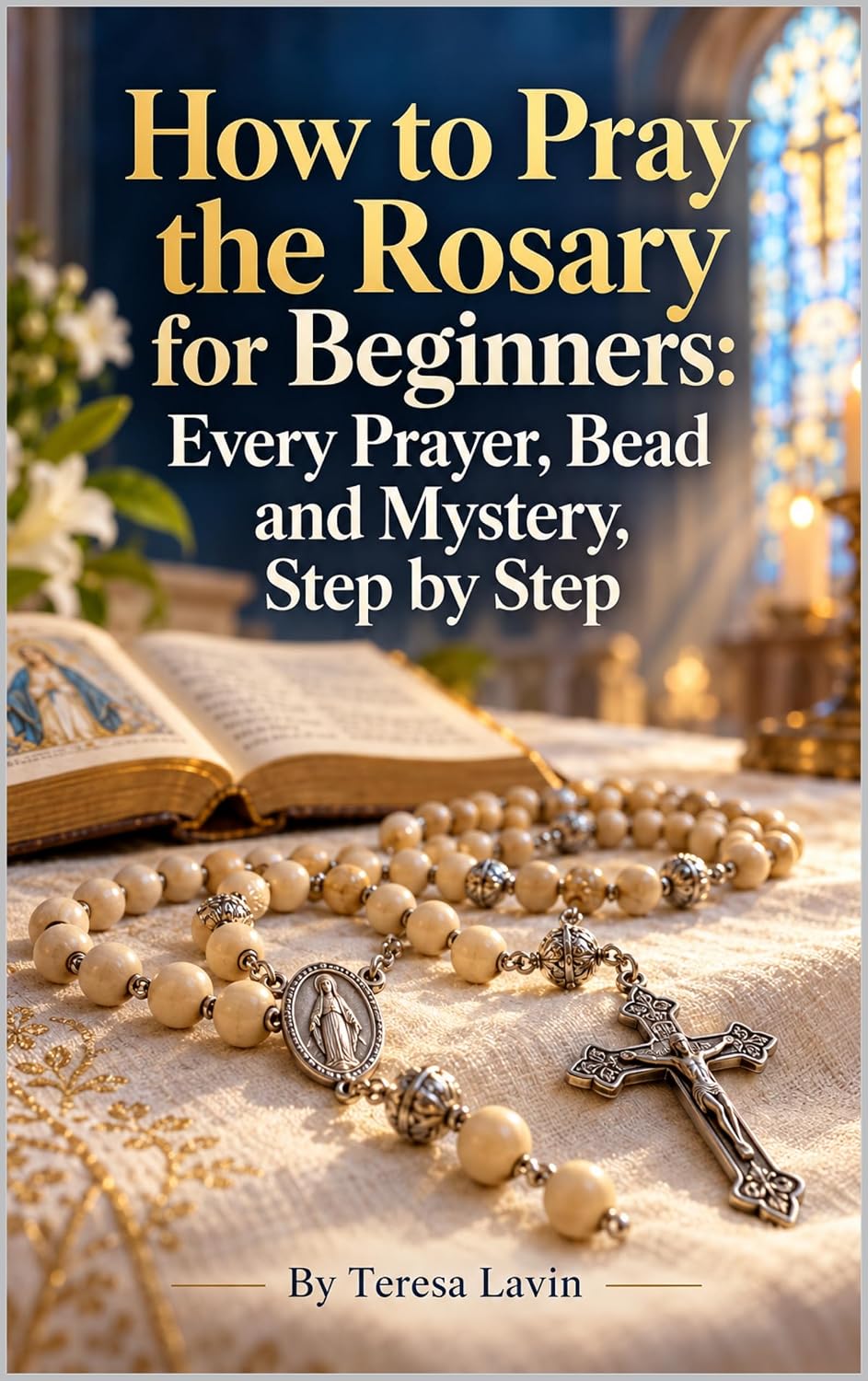
Where to find it
Learn the prayer without pretending you already know it.
A guide for the first Rosary, written for newcomers and for the people praying alongside them.
How to Pray the Rosary for Beginners by Teresa Lavin · ASIN B0HQ2B4XTP